


Hearing “boxed warning” before an infusion can make IV iron sound dangerous as a whole. The FDA warning is narrower: it concerns ferric carboxymaltose, a specific low-phosphate risk, and the patients and repeat doses that need closer monitoring.
At a Glance
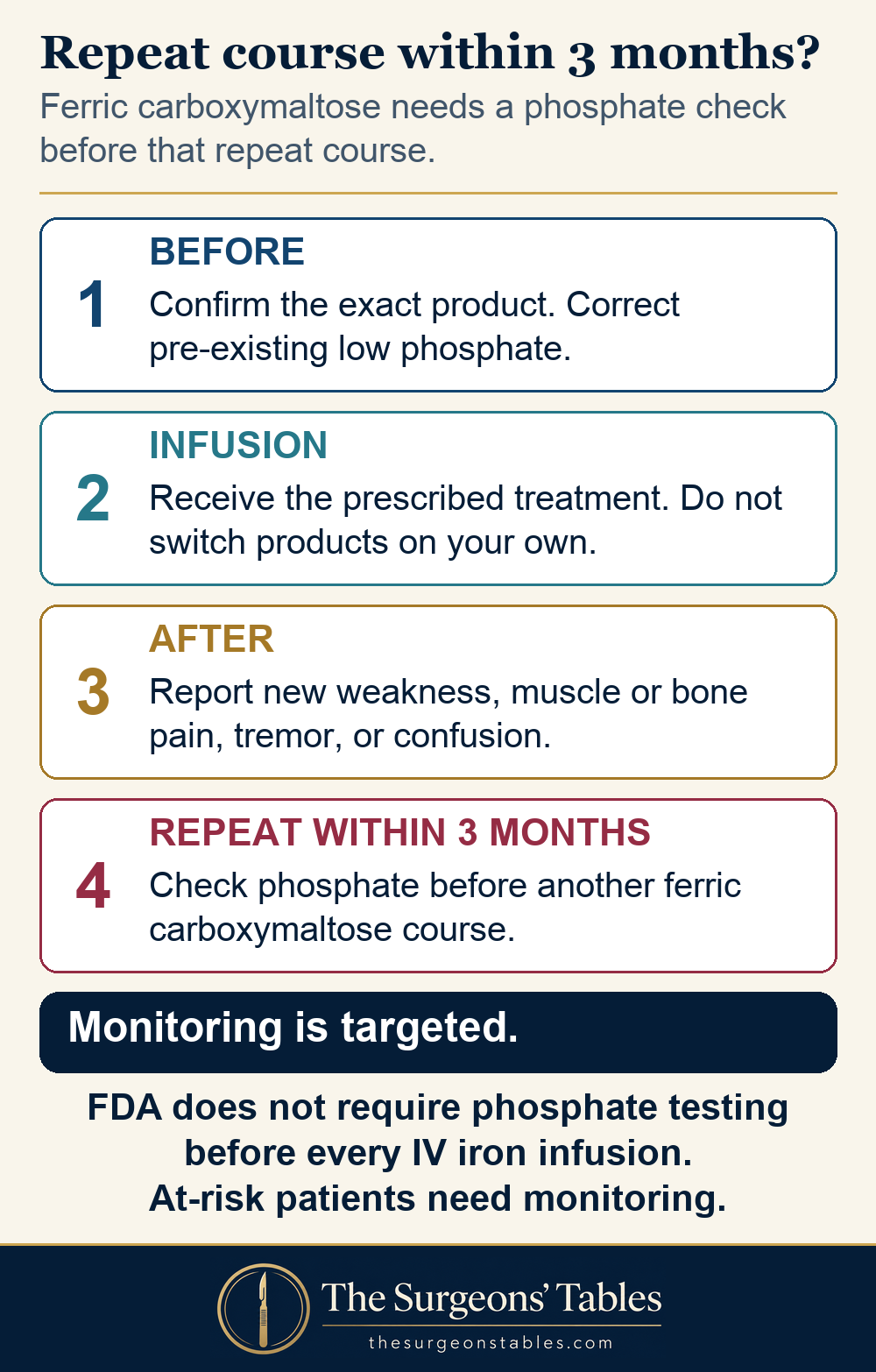
- FDA does not call for phosphate testing before every IV iron infusion. It calls for correction of pre-existing hypophosphatemia, monitoring of at-risk patients, and a phosphate check before any repeat ferric carboxymaltose course given within three months (1).
- Other IV iron products have shown lower rates of low phosphate in trials, but "lower" does not mean "zero risk" (2), (3).
- Never stop or switch a prescribed iron product on your own — bring your questions to the clinician managing your treatment.
In my clinic, patients sometimes ask, “Could I take iron tablets instead?” Others describe constipation with oral iron and ask, “Could I just have an infusion and get it over with?” These questions are a useful starting point for discussing why IV iron is being considered and what patients should understand before treatment.
What the warning actually says
If you were told you need IV iron and then heard about a new "boxed warning," it's natural to wonder if the drug is being pulled or if you should avoid it. The drug has not been withdrawn; the warning calls for a product-specific risk discussion and targeted monitoring.
In September 2026, the FDA added a boxed warning — its strongest label warning — to ferric carboxymaltose, sold as Injectafer, and approved generic versions. The warning addresses a specific problem: some patients develop symptomatic hypophosphatemia, meaning phosphate levels in the blood drop low enough to cause symptoms (1). This is not a statement about every IV iron drug behaving the same way. The name of the specific product matters here, and it's worth asking your care team exactly which one you're receiving.
Why phosphate, and why this drug in particular
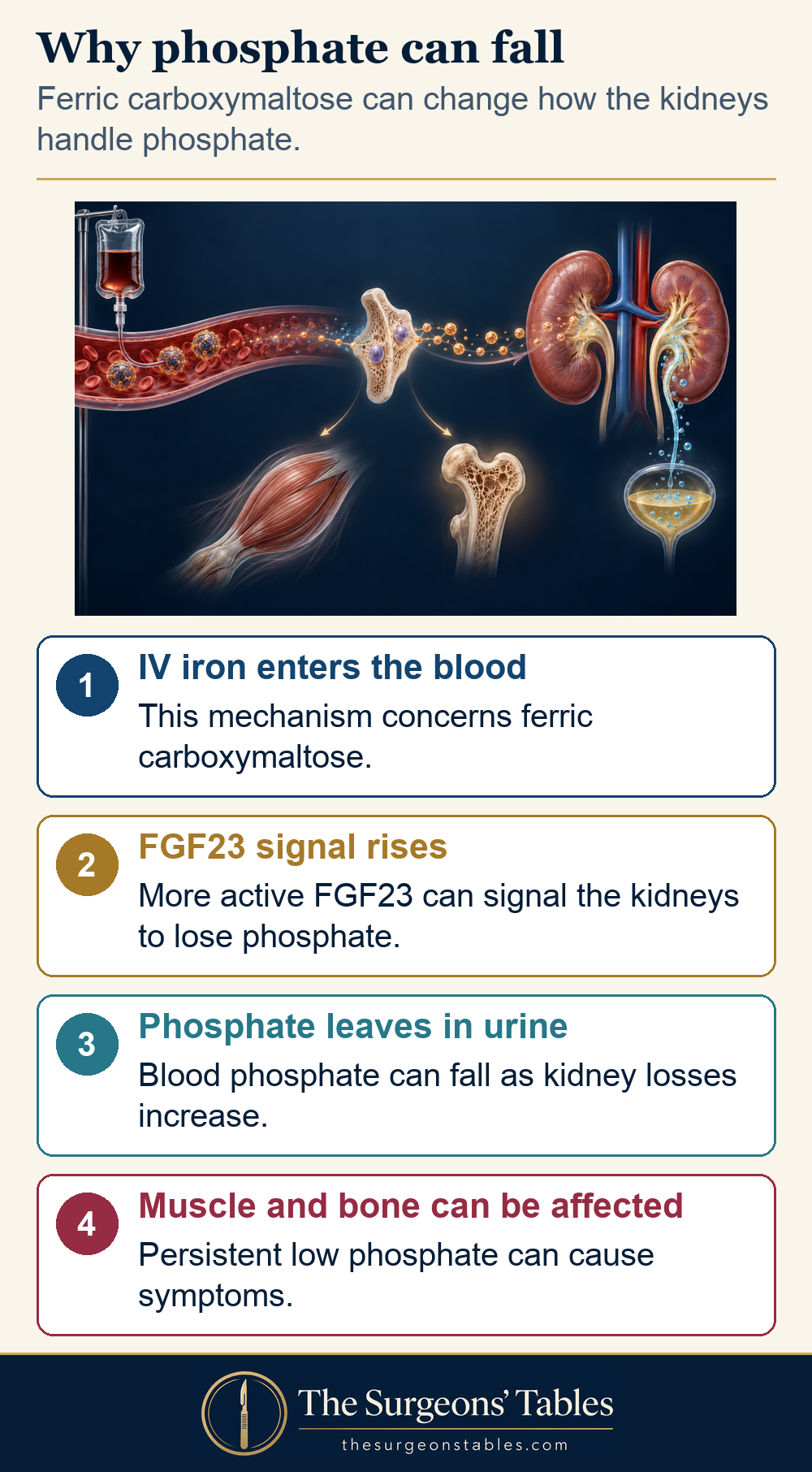
Phosphate is a mineral your body needs for energy production, bone strength, and muscle and nerve function. Certain IV iron formulations can trigger a hormone called FGF23, which tells the kidneys to dump more phosphate into the urine. When that happens repeatedly or in someone already running low, phosphate can fall enough to cause real symptoms (2).
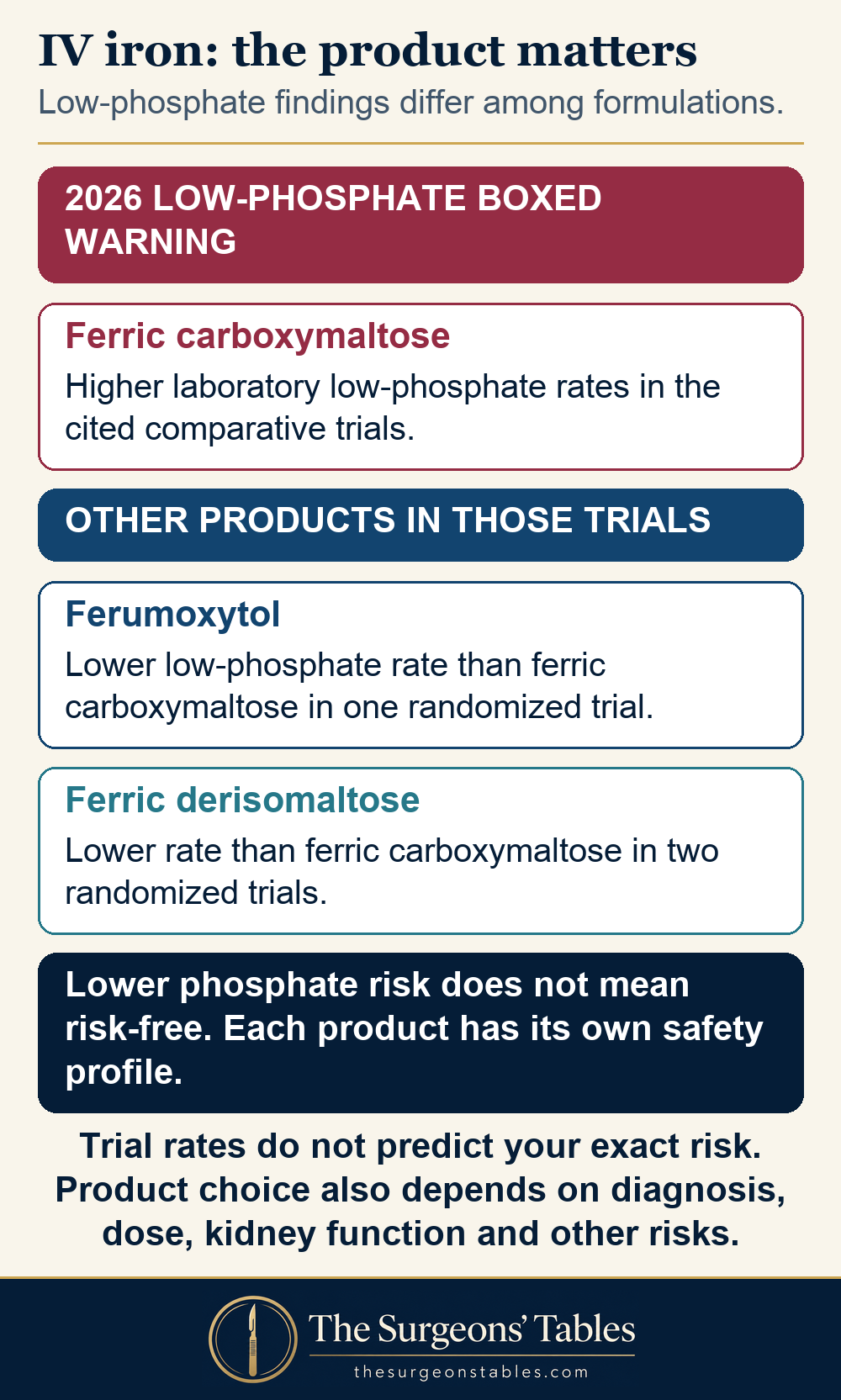
A large randomized trial comparing ferric carboxymaltose to a different IV iron drug, ferumoxytol, found low phosphate levels (below 2.0 mg/dL) were notably more common with ferric carboxymaltose. The trial's physiology data supported the FGF23 mechanism as the likely explanation (2). Separately, two randomized trials comparing ferric derisomaltose to ferric carboxymaltose also found fewer cases of low phosphate with the former over about five weeks of follow-up (3).
None of these numbers translate directly into "your risk is X percent." Trial rates depend on the dose used, how low phosphate was defined, and who was enrolled. They're useful for understanding that these drugs are not interchangeable in this respect — not for predicting exactly what will happen to you.
Symptoms that deserve attention
Low phosphate can be silent, especially if it's mild. When it isn't silent, FDA's communication lists symptoms including worsening fatigue, muscle weakness or pain, tremor, confusion, seizures, and abnormal heart rhythms. If phosphate stays low for a long time, it can contribute to bone softening (osteomalacia) and fractures (1), (3).
The tricky part: several of these symptoms — especially fatigue and weakness — overlap heavily with the anemia that iron is being given to treat in the first place. Feeling tired after an iron infusion doesn't automatically mean your phosphate dropped. Symptoms alone can't diagnose low phosphate; a blood test can.
Who actually needs phosphate monitoring
FDA's guidance is deliberately targeted, not universal. It advises:
- Correcting any pre-existing low phosphate before treatment when possible
- Monitoring phosphate levels in patients considered at risk
- Checking phosphate before any repeat course of ferric carboxymaltose given within three months of the last course
- Considering permanently stopping the drug in cases of severe, symptomatic, or persistent low phosphate (1)
This is a risk-based approach, not a new rule that everyone getting IV iron needs a phosphate panel every time. FDA does not require universal testing before every infusion. Whether to test outside the specified high-risk and repeat-course situations remains a clinical judgment based on the patient's nutrition, gastrointestinal or kidney conditions, vitamin D status, medication history, and planned dosing.
How the three studied products compare
| Product | What the evidence shows | What it doesn't show |
|---|---|---|
| Ferric carboxymaltose (Injectafer) | Subject of the 2026 boxed warning; higher rate of lab-confirmed low phosphate than ferumoxytol in a large randomized trial (1), (2) | Does not mean every patient will develop symptoms |
| Ferumoxytol | Lower rate of low phosphate compared with ferric carboxymaltose in that same trial (2) | Not studied here for its own separate safety profile beyond this comparison |
| Ferric derisomaltose | Lower rate of low phosphate than ferric carboxymaltose in two randomized trials (3) | Not shown to be risk-free; suitability depends on your case |
Choice of IV iron product isn't just about phosphate. Dosing convenience, the condition being treated, kidney function, other medical conditions, and clinician experience all factor in. A lower phosphate-risk signal in a trial is one input, not the whole decision.
What this means for you, practically
If IV iron has been recommended, here's what an informed patient conversation looks like:
Questions to ask before your infusion
- What is the exact name of the iron product I'm being given?
- Do I have any risk factors for low phosphate — prior low phosphate levels, malnutrition, or other conditions that affect phosphate?
- Will I need another dose within the next three months, and if so, should phosphate be checked beforehand?
- What symptoms should prompt me to call rather than wait for my next visit?
Symptoms to report promptly
- New or worsening muscle weakness, cramping, or bone pain
- Tremor or confusion
- Any irregular heartbeat sensations
- Fatigue that feels different from your usual anemia-related tiredness, especially if it's getting worse rather than better after your infusion
Seizure, severe confusion, fainting, chest symptoms, or a sustained abnormal heartbeat warrants urgent evaluation. For less severe but persistent symptoms, call the prescribing team and ask whether a phosphate blood test is appropriate.
A warning is a decision aid, not a ban
A boxed warning is meant to make a serious risk hard to overlook. It does not mean that benefit can never outweigh risk. Untreated iron-deficiency anemia can impair function and, in some patients, strain the cardiovascular system. The useful response is to identify the product and the patient's risk before treatment, then monitor when FDA says monitoring matters. That preserves the benefit of iron replacement while making a preventable complication easier to recognize.
Keep the follow-up tied to timing
If phosphate is checked, ask when the result is expected and who will act on it. A value obtained before treatment answers a different question from one obtained after symptoms or before another course. Also ask how the iron response itself will be measured. Hemoglobin, ferritin, symptoms, and phosphate serve different purposes; one normal result does not substitute for the others. Keep the infusion date and product name in your record so a later clinician can connect new symptoms with the correct exposure.
The practical conclusion
The boxed warning should change a vague conversation about “IV iron” into a specific one about product, timing, and risk. Ferric carboxymaltose has a distinct, documented phosphate risk; other formulations have shown lower rates in comparative trials, but none should be selected from a headline alone. Know the product name, ask for a phosphate check before any repeat course within three months, and report compatible symptoms rather than stopping treatment on your own.
References
This article is for general education and does not replace individualized medical advice. Do not stop or switch a prescribed medicine on your own. Read our medical disclaimer.