
Iron pills can improve the blood count without explaining why iron was lost in the first place. For some adults, looking at both the upper and lower digestive tract is the safest next step; for others, age, menstrual bleeding, symptoms, and procedural risk change the decision.
At a Glance
- First confirm iron-deficiency anemia; not every low hemoglobin level is caused by iron loss.
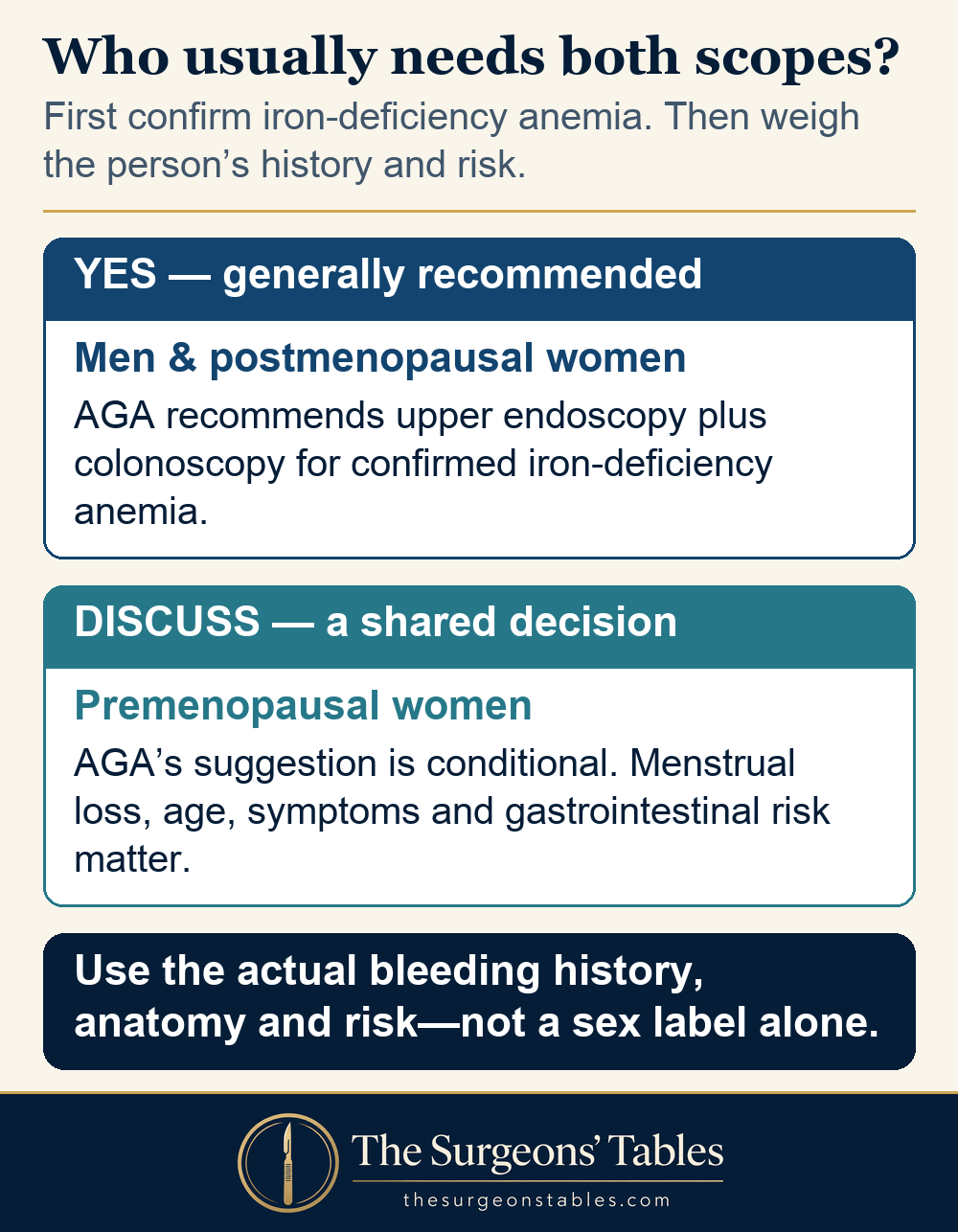
- AGA recommends upper endoscopy plus colonoscopy for asymptomatic men and postmenopausal women with confirmed iron-deficiency anemia (1).
- AGA conditionally suggests the same evaluation for premenopausal women, where age, menstrual loss, symptoms, family history, and preferences matter (1), (2).
- After a high-quality negative evaluation, the next step is often targeted testing and an iron trial, not an automatic capsule endoscopy (1).
Why look in both directions?
Iron deficiency can develop because the body is losing blood, absorbing iron poorly, or receiving too little iron. In adults, slow gastrointestinal blood loss may be invisible. The source can be above or below: an ulcer, inflammation, celiac disease, a stomach lesion, a colon polyp, or colorectal cancer may all enter the differential.
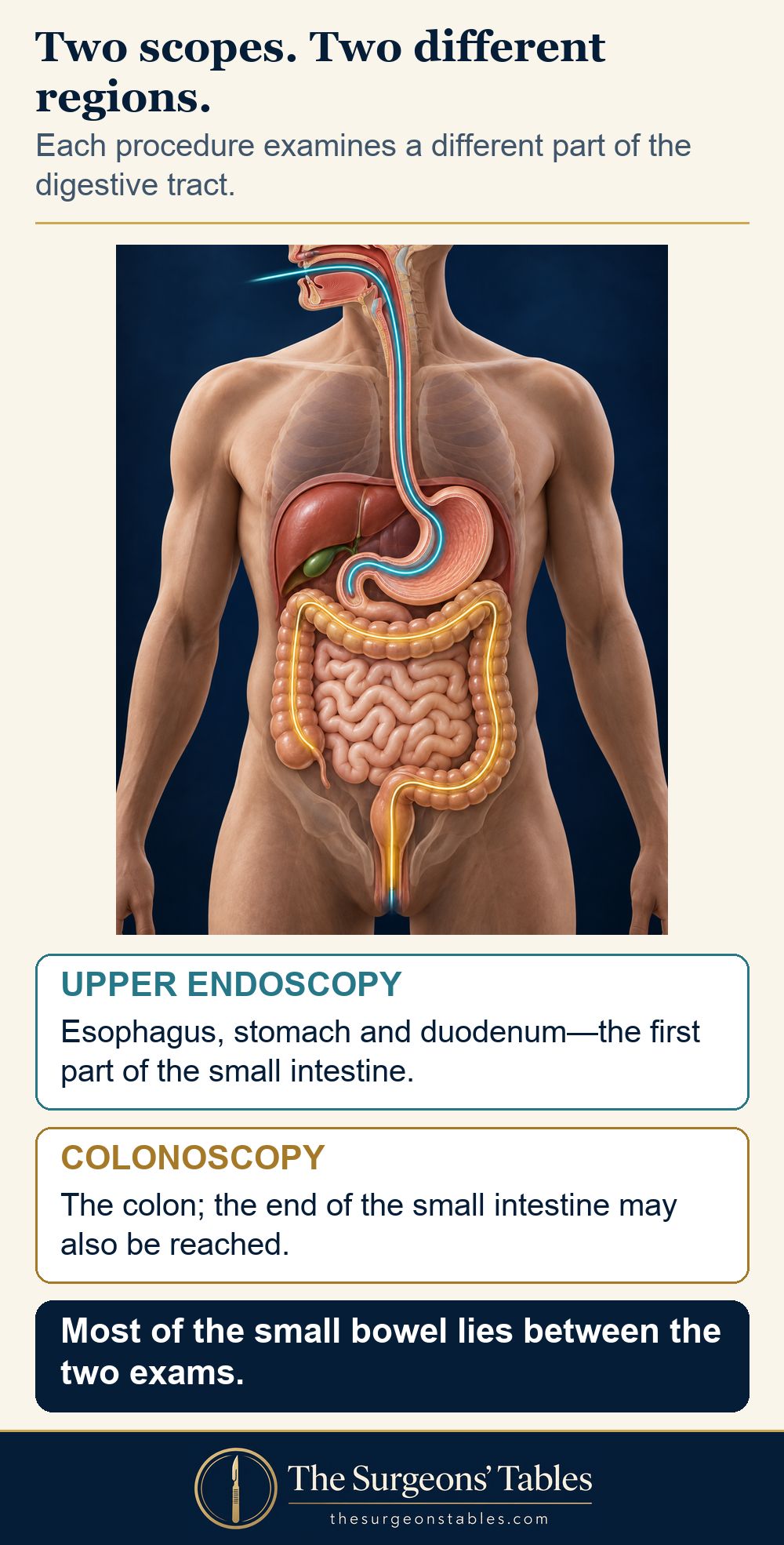
“Bidirectional endoscopy” means examining both ends of the digestive tract. Upper endoscopy looks at the esophagus, stomach, and first part of the small intestine; colonoscopy examines the colon and terminal ileum when reached. The tests answer different questions, so a normal result on one side does not clear the other.
Step one: confirm the problem
The decision should not begin with an endoscopy order. It begins by confirming anemia and iron deficiency and reviewing diet, menstrual and other bleeding, blood donation, pregnancy, medications, surgery, kidney disease, inflammation, and prior laboratory trends.
AGA recommends a ferritin cutoff of 45 ng/mL rather than 15 ng/mL when diagnosing iron deficiency in a patient who is anemic (1). Ferritin is still not perfect: inflammation and chronic illness can raise it, so clinicians may also use transferrin saturation and other findings. The guideline threshold is a diagnostic aid, not a rule that everyone below 45 needs two procedures.
Men and postmenopausal women
For asymptomatic men and postmenopausal women with confirmed iron-deficiency anemia, AGA recommends bidirectional endoscopy (1). In these groups, routine menstrual loss is not available as a common explanation, and the consequence of missing a gastrointestinal lesion can be high.
Symptoms may determine sequence and urgency. Trouble swallowing, upper abdominal pain, or black stool may push upper endoscopy earlier; a bowel-habit change, rectal bleeding, or lower abdominal symptoms may prioritize colonoscopy. In many settings both are completed in one session for efficiency.
Premenopausal women: a shared decision
AGA conditionally suggests bidirectional endoscopy for asymptomatic premenopausal women rather than iron therapy alone (1). “Conditional” matters: this is not the same strength of recommendation used for men and postmenopausal women. The supporting evidence is less certain, and the expected yield changes with age and risk.
A younger patient with clearly heavy menstrual bleeding and no digestive symptoms presents a different balance from someone nearing menopause with recurrent anemia, weight loss, a family history of colorectal cancer, or iron deficiency that seems out of proportion to menstrual loss. The AGA technical review stresses this uncertainty and the need to consider plausible non-GI blood loss (2). A clinician should discuss what could be found, procedure risks, and the option of follow-up after iron treatment.
What if both tests are normal?
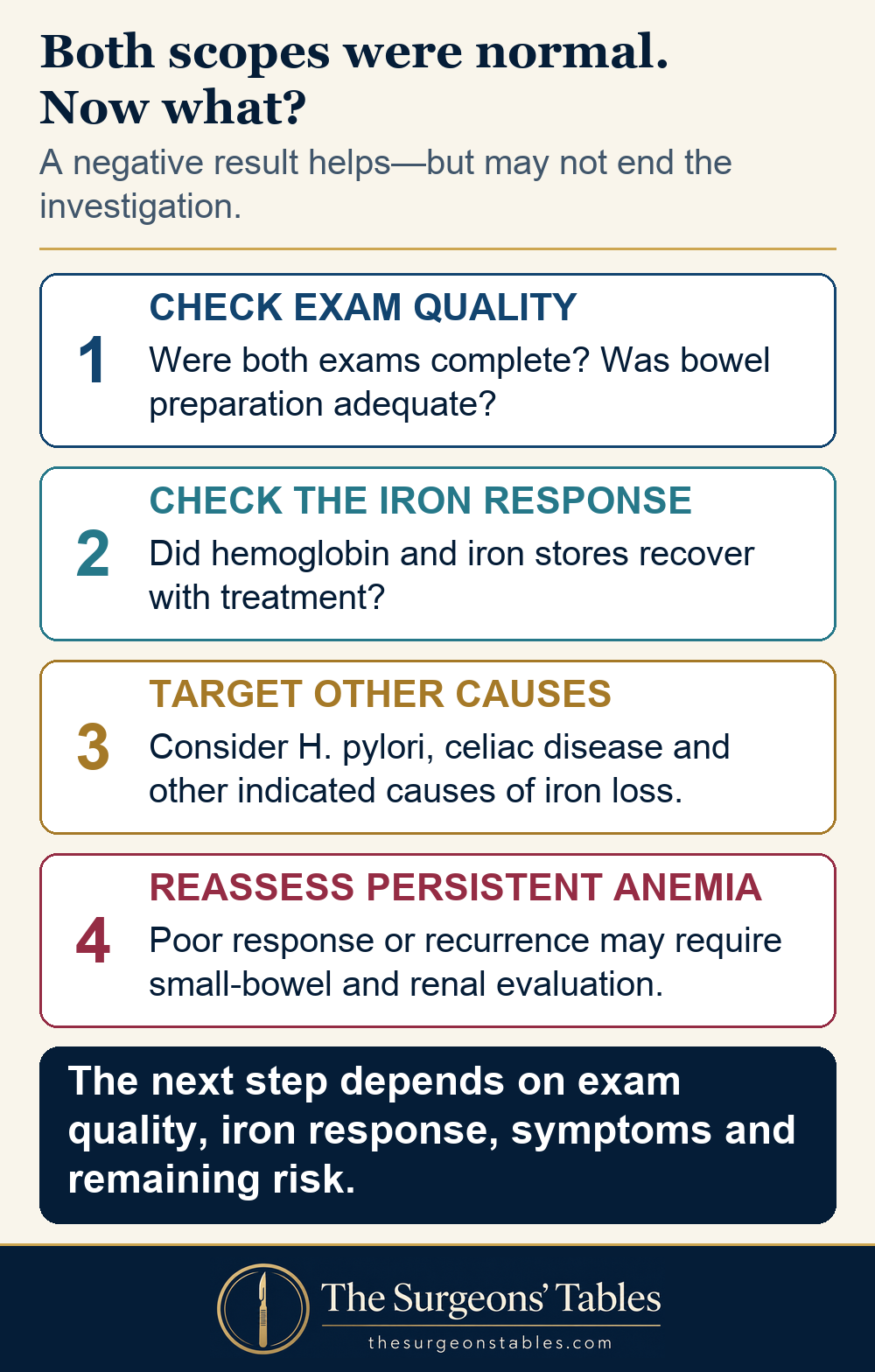
A normal upper endoscopy and colonoscopy are useful results, but they do not end the evaluation automatically. AGA suggests noninvasive testing for Helicobacter pylori after negative bidirectional endoscopy and treating it if positive. If celiac disease is plausible, celiac serology—usually tissue-transglutaminase IgA with assessment for IgA deficiency—generally comes before small-bowel biopsy. For an uncomplicated asymptomatic patient, an initial trial of iron is favored over routine capsule endoscopy (1).
The response to iron becomes data. Does hemoglobin rise? Are iron stores restored? Does deficiency recur after treatment ends? British guidance recommends evaluating the small bowel and renal tract when good-quality upper and lower studies are negative but the response is inadequate or anemia returns. Capsule endoscopy is a preferred small-bowel test in that setting (3).
When the plan needs to move faster
Visible bleeding, black stool, progressive difficulty swallowing, unexplained weight loss, persistent vomiting, a new bowel-habit change, a mass, severe anemia, or cardiovascular symptoms can change urgency. So can anticoagulant use or a strong family history. These findings do not prove cancer, but they make “take iron and wait” less reassuring.
Procedure risk also matters. Frailty, severe heart or lung disease, pregnancy, and prior incomplete colonoscopy may change the approach. CT colonography can sometimes substitute for colonoscopy when colonoscopy is unsuitable, but it cannot biopsy or remove a lesion during the same test.
Questions to bring to the visit
- Is my anemia definitely iron deficient, and what supports that conclusion?
- Is there an obvious source of blood loss, and is it enough to explain the severity?
- Do my age, sex, symptoms, family history, or recurrence make both procedures worthwhile?
- If both are normal, what is the plan for H. pylori, celiac testing, iron replacement, and repeat labs?
- What finding or lack of response would trigger small-bowel or renal evaluation?
Why iron replacement and investigation often happen together
Finding the cause and treating the deficiency are parallel tasks. A patient usually should not remain anemic while waiting weeks for procedures, unless a clinician has a specific reason to delay iron. Oral or IV iron can restore hemoglobin, but a response does not prove that the source has been found. A bleeding lesion and iron replacement can coexist: the blood count improves while the underlying problem remains.
The opposite is also informative. If hemoglobin or iron stores fail to recover despite an adequate regimen, clinicians reconsider adherence, absorption, ongoing loss, inflammation, the original diagnosis, and whether the dose was sufficient. This is why the follow-up laboratory plan belongs in the first conversation rather than after the endoscopy report arrives.
What each procedure can add
Upper endoscopy can identify ulcers, erosive disease, tumors, and findings that support targeted biopsies. Colonoscopy can detect cancer, polyps, inflammation, and vascular lesions, and it can remove or sample some findings during the same procedure. Neither test sees most of the small bowel. Both also find abnormalities that may be incidental and not sufficient to explain the degree of iron loss.
Ask whether the study was technically complete and the preparation adequate. “Negative” is reassuring only to the extent that the relevant lining was actually visualized. If a prior colonoscopy was incomplete or the bowel preparation poor, its date alone should not be used to close the question.
Do not use sex labels as shortcuts
The guideline categories estimate common sources of blood loss; they do not replace anatomy, history, or individual risk. A person who does not menstruate should not be assumed to have menstrual iron loss, and a person who menstruates can still have gastrointestinal disease. Ask about actual bleeding pattern, pregnancy status, prior surgery, and organ inventory when relevant. The clinical question is where iron is being lost or poorly absorbed, not whether a demographic label can supply an easy explanation.
The practical conclusion
Both procedures are most clearly supported for men and postmenopausal women with confirmed iron-deficiency anemia. Premenopausal women often face a closer shared decision rather than an automatic yes or no. The purpose is not to “prove” that anemia came from the gut; it is to avoid missing important upper and lower causes while matching the burden of testing to the patient's actual risk.
References
This article provides general educational information and does not replace evaluation, diagnosis, or treatment by a qualified healthcare professional. Read our medical disclaimer.